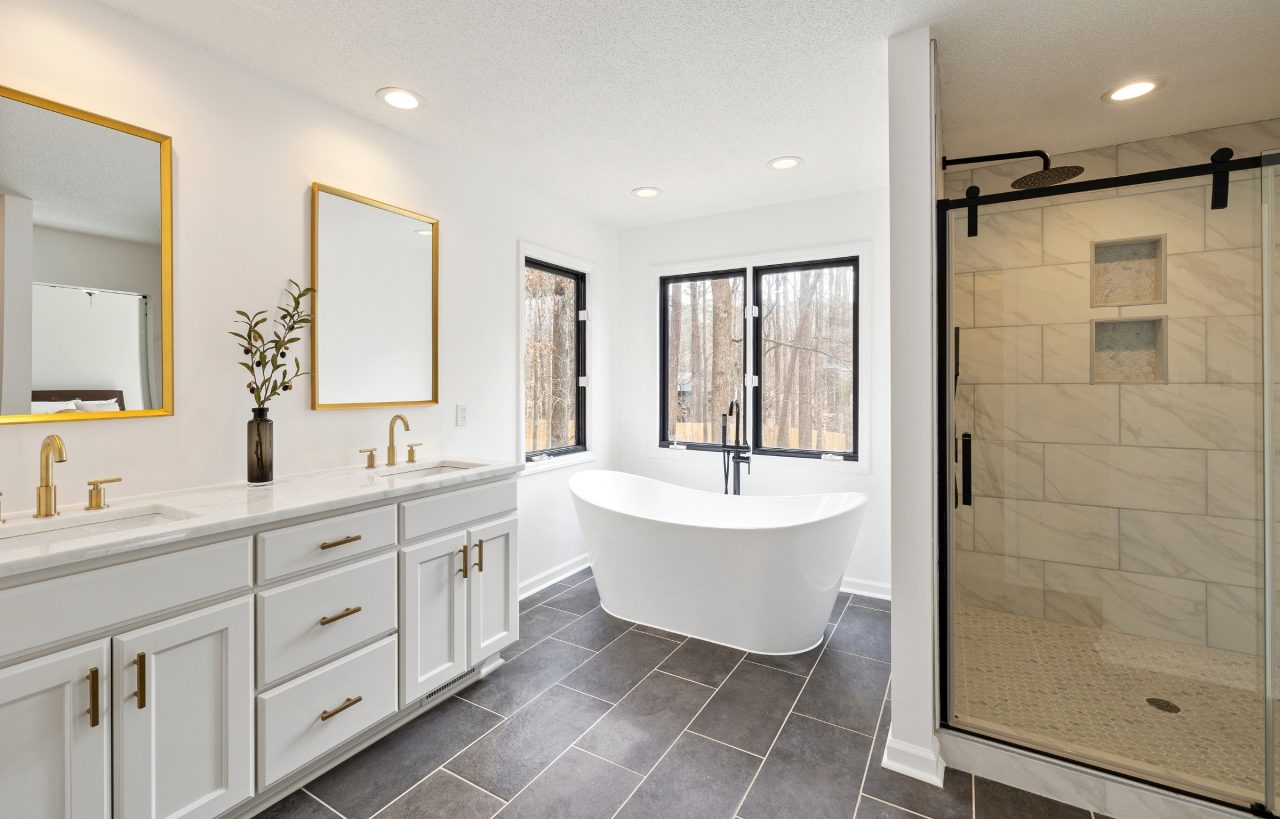
Bathrooms are one of the most used rooms in the home — a place to relax, refresh and reset. When planning a renovation, one of the most important decisions is whether to install a traditional bathroom (with separate enclosed shower or bath) or transform the space into a wet room — a fully waterproofed, open-plan space designed for ease of use, modern flow and low maintenance.
Across Weston-super-Mare, Worle, Clevedon, Portishead, and surrounding North Somerset, homeowners are increasingly considering wet rooms as a practical and stylish alternative to a standard bathroom. But which one is right for your home?
In this guide, we break down the benefits, differences, costs, maintenance, accessibility, and suitability of both — so you can make a confident decision.
What is a Traditional Bathroom?
A traditional bathroom features:
-
A bath and/or shower enclosure
-
Standard flooring that is not designed to get fully wet
-
A shower tray that contains water in a defined area
-
Tiled walls and sealed surfaces around water points
This is the typical bathroom found in most UK homes.
What is a Wet Room?
A wet room is an open, fully waterproofed space with:
-
Level flooring (no step into the shower)
-
A concealed drainage channel or central floor drain
-
Full room tanking (specialist waterproofing layer)
-
Optional glass screens to reduce splash zone
It creates a sleek, modern, easy-access showering space.
Wet Room vs Traditional Bathroom — At a Glance
| Feature | Wet Room | Traditional Bathroom |
|---|---|---|
| Accessibility | Excellent — step-free | Fair — shower trays and baths require stepping in/out |
| Maintenance | Low — fewer moving parts & surfaces | Medium — screens, seals & grout need upkeep |
| Style | Modern, minimalist, space-enhancing | Flexible — traditional, modern, or luxury |
| Waterproofing | Full room tanked | Only shower area is waterproofed |
| Cleaning | Very easy — open layout | More surfaces, corners & fittings |
| Cost | Can be higher due to tanking | Can be lower depending on fixtures |
| Best For | Small bathrooms, mobility needs, modern homes | Larger bathrooms, family-use layouts |
Advantages of Choosing a Wet Room
1. Ideal for Smaller Bathrooms
Wet rooms make compact rooms feel larger because:
-
There is no bulky shower enclosure
-
The floor flows as one continuous surface
-
Light reflects evenly throughout the space
Even very small box rooms can become comfortable wet rooms.
2. Easier to Clean
No shower doors. No trays. No hidden corners.
Wet rooms typically use:
-
Large format tiles
-
Minimal grout lines
-
Simple glass panels (if used at all)
This makes cleaning fast and effortless.
3. Perfect for Accessibility & Future-Proofing
Wet rooms are a strong choice for:
-
Individuals with reduced mobility
-
Households planning for long-term access needs
-
Family members using mobility aids
The step-free entry is not only practical — it’s safer.
4. Modern, Spa-Like Aesthetic
Wet rooms create:
-
Clean lines
-
Open flow
-
A high-end, contemporary look
They are popular in new builds and luxury renovations across North Somerset.
Advantages of Choosing a Traditional Bathroom
1. Better for Families
If your home includes:
-
Young children
-
Bath-loving adults
-
Pets needing washing
A bath is incredibly practical.
Many homes choose:
Wet room + bath combo
(if space allows).
2. Lower Initial Cost
Traditional bathrooms don’t require full-room waterproofing, so labour costs can be lower.
This makes them ideal for:
-
Landlords
-
Rentals
-
Budget updates
-
Quick replacements
3. More Design Flexibility
You can mix:
-
Roll-top baths
-
Modern showers
-
Twin vanities
-
Fitted storage furniture
Traditional bathrooms allow for styling personality, from classic to ultra-modern.
Which One is Better for Your Property?
Choose a Wet Room If:
✔ You want an easy-clean, low-maintenance space
✔ You prefer a modern, open-plan style
✔ You have a small bathroom that feels tight
✔ You want accessibility or step-free entry
✔ You are renovating an en-suite, loft conversion, or downstairs bathroom
Choose a Traditional Bathroom If:
✔ You need a bath for family living
✔ You prefer a more enclosed shower space
✔ You want lower installation costs
✔ You are styling a period or vintage home
✔ You are preparing a property for resale to families
Typical Installation Times
-
Wet Room: 5–10 working days
-
Traditional Bathroom: 4–8 working days
Times vary based on:
-
Tile size
-
Pipework changes
-
Waste / joist access
-
Ventilation upgrades
We provide a clear schedule before work begins.
Areas We Cover
Wet rooms, bathrooms and shower installations across:
-
Weston-super-Mare
-
Worle
-
Clevedon
-
Portishead
-
Nailsea, Congresbury & Yatton
-
Banwell, Winscombe & Cheddar
Local, qualified and trusted.
Thinking About a Bathroom or Wet Room Upgrade?
We provide clear advice, transparent pricing and quality workmanship — no rush, no mess, no stress.
📞 Phone: 07453 304504
📧 Email: matt@teddytailsplumbing.co.uk
🌍 Serving: Weston-super-Mare, Worle, Clevedon, Portishead & all North Somerset
Let’s design a bathroom that works beautifully for your lifestyle.
FAQ
Q1. Can you install wet rooms in older houses?
Yes — with correct tanking, gradient control and ventilation, wet rooms work well in all property types.
Q2. Does a wet room add value to a home?
Yes — especially when well-installed and paired with another bathroom that retains a bath.
Q3. Are wet rooms difficult to waterproof?
Not when installed by a trained professional. Waterproofing is the most important stage and must be done correctly.
Q4. Can I have underfloor heating in a wet room?
Yes — underfloor heating is very common and helps the room dry faster.
Q5. Do wet rooms splash water everywhere?
With correct floor gradient and optional glass panels, splash is controlled effectively.